A Venue Page Beside a Visitor Leaflet: What Each One Is For
Use a venue page and visitor leaflet to plan a Bình Định outing, choose a route, and identify which details to confirm before you set out.
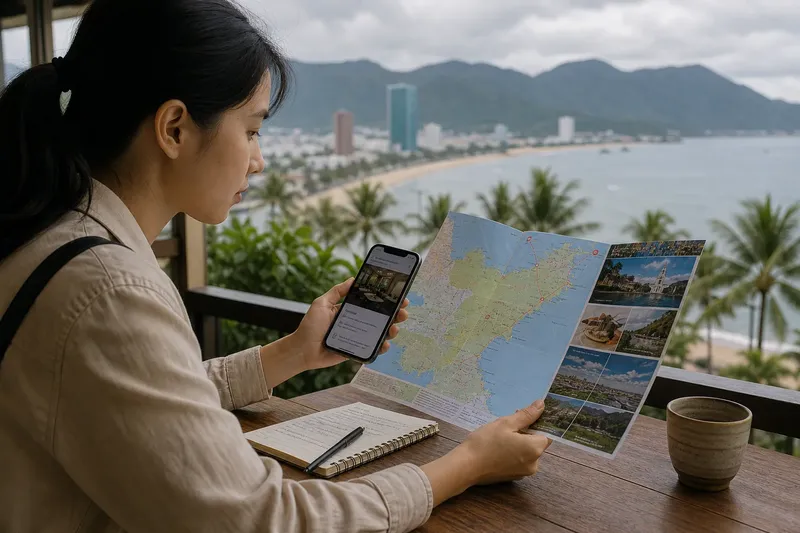
A visitor leaflet can show where a resort sits in relation to Quy Nhơn, while its venue page can help you ask about a particular service. For casino-related tourism in Bình Định, the useful question is not which source is better, but which decision each one can support.
What can a venue page tell you?
A venue page describes a specific property or service. It may give you a restaurant name, booking instructions, an address or a contact route; those details can help turn a general idea into a question you can put to the venue.
Read for the information your outing depends on. If a page names a restaurant but does not say whether non-residents may dine there, for instance, contact the venue before choosing it as a stop.
When does a visitor leaflet help?
A visitor leaflet places destinations among roads, attractions and other points of interest. Use it to consider whether a resort belongs in a day around Quy Nhơn or is better treated as a separate outing.
A map or symbol can help with orientation, but it may not tell you how to reach a site, what transport is available or whether a facility welcomes visitors. For those details, consult a suitable map, transport information or the venue itself.
Which source fits the decision you need to make?
- Observation: The venue page gives a named service and a contact route. If both are present, use that route to confirm the detail that matters; if the contact route is missing, look for the property’s main contact channel before relying on the listing.
- Observation: The leaflet shows the resort alongside your other planned stops. If the locations are clear enough to compare, use it to sketch the outing; if the route is unclear, consult a local map or transport information instead.
- Observation: A restaurant is named, but visitor access is not explained. If access is explicitly stated, decide whether it fits your plans; if it is not, ask the venue and keep another dining option available.
- Observation: A leaflet calls a property a casino. If you need only a broad point of orientation, use the label for that limited purpose; if you need to know its legal or operational status, consult relevant official information.
- Observation: A description omits a condition that could change your outing. If that condition does not affect your decision, continue with other planning details; if it does, contact the organisation responsible before settling your plans.
- Observation: You may have limited internet access while travelling. If the leaflet contains the locations you need, keep a copy for orientation; if a service detail could change, save a contact route so you can confirm it.
How might these sources shape a day in Quy Nhơn?
Say you are planning a day in Quy Nhơn. Your leaflet marks a resort beyond the city centre, and you have a restaurant there in mind, but the leaflet says nothing about access for people who are not staying at the property.
You use the leaflet to compare the resort with your other stops, then open the venue page and find the restaurant’s contact route. You ask whether non-residents may dine there; if the venue confirms access, you keep the restaurant in the itinerary, and if it does not, you choose another stop. The route decision comes from the leaflet’s geography, while the dining decision depends on the venue’s answer.
What should you check before setting out?
Keep a small planning note with the exact details you still need to resolve:
- Observation: The venue page gives an address. If it matches the property you intend to visit, save it with your route; if the name or location differs, confirm the correct destination before travelling.
- Observation: The leaflet marks the property but does not show a route. If you can trace the journey on a local map, use that route for planning; if not, check transport information or ask the venue how visitors can reach it.
- Observation: The service is listed without opening or booking details. If the venue confirms the arrangements you need, plan around them; if it does not, choose a flexible alternative.
- Observation: A page describes visitor access in general terms. If it addresses the service you plan to use, rely on that detail for your decision; if it does not, ask about that specific service.
- Observation: The leaflet and venue page give different descriptions. If the difference concerns orientation only, use a current map to clarify the location; if it affects access or the service, contact the responsible organisation before going.
- Observation: A claim concerns legal or regulatory status. If an appropriate official source addresses the question, use it for that purpose; if you cannot identify one, avoid treating tourism material as confirmation and seek guidance from the relevant authority.
What do visitors ask about venue pages and leaflets?
Should I use a venue page or a visitor leaflet first?
Start with the leaflet if you are deciding where a property fits among other places. Start with the venue page if you already have a particular service or contact question.
Can a visitor leaflet confirm that a service is available?
It can help you identify a place, but it may not explain access to an individual service. Check the venue’s information or contact the venue directly about the service you intend to use.
What if the two sources give different details?
Check whether they address the same issue, such as location, facilities or visitor access. If the difference could change your plans, ask the organisation responsible for that detail rather than treating a broad description as an answer.
Where should I check a legal or regulatory question?
Use relevant official information for questions about status or regulation. A tourism leaflet and a venue page can help you identify a place, but they are not substitutes for an appropriate official source.
How should you read resort and casino descriptions?
A resort can bring accommodation, dining and other facilities together. A tourism listing may use “casino” as a broad label for a destination, but that wording alone does not establish which services are operating, who may use them or what the property’s legal status is.
For casino-related tourism in Bình Định, use a visitor leaflet to plan the geography of your outing and a venue page to frame a precise enquiry. Keep the search phrase “visitor leaflet for Bình Định” in mind as you gather information: the useful result is a route you can plan and a clear list of details still to confirm.